
In Nepal, hate comments leading to cyberbullying often begin on a screen, but people silently suffer offline and it becomes the violence we scroll past.
Whether it is a threatening message, a fake account leaving a humiliating comment, or a coordinated attack on social media, the issue may seem strictly digital. However, for the individual targeted, the consequences quickly spill over into real life and the fear extends far beyond the bully itself.
To understand the impact of online harassment and why so many incidents go unreported, we conducted a brief 72-hour online questionnaire as part of this investigation. One respondent agreed to share more details provided her identity was protected due to the sensitivity of her situation. In this article, she is referred to by the pseudonym “Asha.”
Unlike hate comments that disappear beneath newer posts, Asha’s experience followed her offline. After an intimate video was leaked without her consent, the harassment spread beyond the internet and into her daily life. When she first discovered that the video had been circulated, her instinct was immediate. “Let’s call the police,” she remembered thinking.
Unlike many victims, Asha already knew that Nepal Police’s Cyber Bureau accepted complaints related to online abuse. Through her previous association with a women’s rights organization, she had received training on gender-based violence and was familiar with the reporting process. She contacted the Cyber Bureau the same day she found out about the leak and was advised to file a formal complaint the following morning.
Her experience also revealed another barrier identified throughout this investigation: awareness itself is uneven. Knowing where to report, what evidence to preserve and how the legal process works is information many victims simply do not have. Yet for Asha, knowing the process did not make it easy.
When she arrived at the Cyber Bureau, she expected a private and confidential environment. Instead, she found herself recounting one of the most traumatic moments of her life in an open office. To verify the complaint, officers viewed the leaked video on a computer that was visible to others nearby. People passing through the office glanced at the screen. Some laughed looking at the screen and at her.
Although the officers assured her that her case would be handled confidentially, the experience itself left her feeling exposed. Each step during the reporting required her to revisit the trauma. “You relive it every single time,” she said. “You explain it to one person, then another, then someone else. The trauma doesn’t end with the incident. It continues throughout the reporting process.”
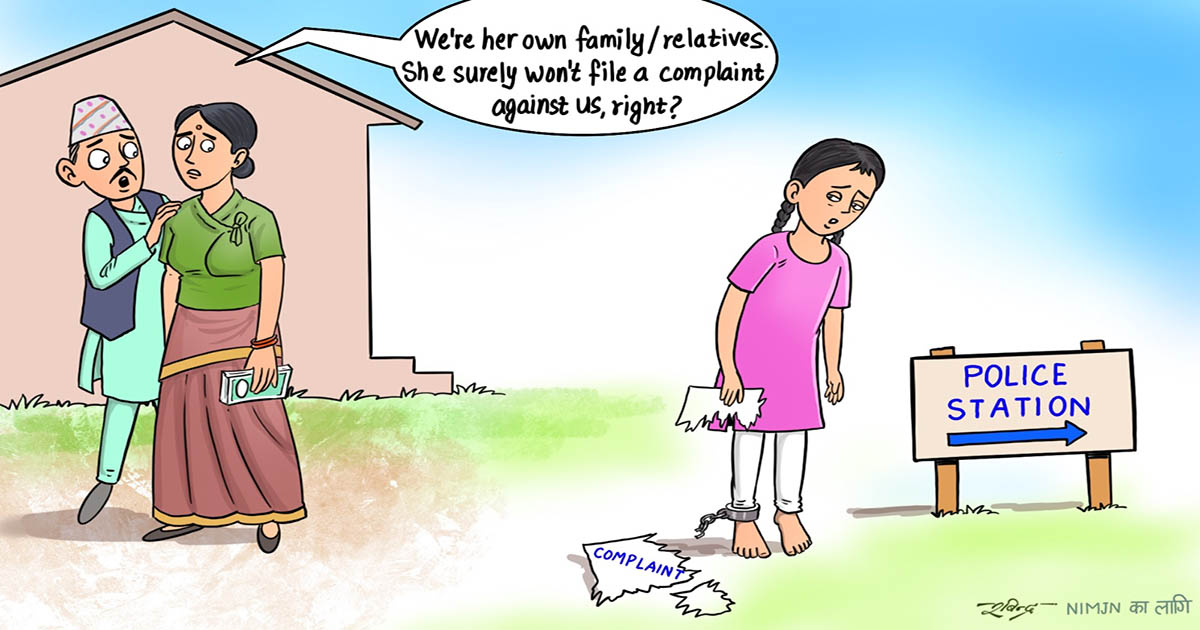
Eventually, the emotional weight of repeatedly narrating her experience became overwhelming. Although she wanted accountability, she stopped following up on the case because every visit to the office meant reopening wounds she was trying to heal.
For Asha, the greatest obstacle was not deciding to report but enduring everything that came after. “I understand why people choose not to report,” she said. “It’s not because they don’t want justice, but because reporting can become another trauma.”
Why victims choose not to report
Among respondents who said they had experienced online harassment, very few had sought formal help. Many said they confided only in close friends or family members, while others chose not to tell anyone at all. Several respondents cited a lack of confidence in reporting mechanisms, saying they believed no action would be taken, that the reporting process was too complicated or that they simply did not know how to approach the officials while protecting their privacy.
The survey also showed the emotional consequences of online abuse. Respondents described withdrawing from social media, deleting accounts, avoiding public posts and limiting their online participation after experiencing violence. One respondent said she stopped posting on Instagram for nearly two years after someone repeatedly created new accounts to stalk and comment on her personal blog. Another woman said offensive comments on a simple photograph left her reluctant to make her social media accounts public again.
Perhaps the most striking response came from a 20-year-old woman who described months of harassment by her former boyfriend and his friends after ending their relationship. She wrote that the abuse escalated to body shaming, repeated phone calls from different numbers and humiliation within her college. The emotional toll became so severe that she stopped attending classes and stopped using social media for months. Despite the severity of the abuse, she chose not to formally report it because she did not believe meaningful action would be taken.
These accounts reinforce the central finding of this investigation: cyberbullying in Nepal often remains under-reported not because victims consider it insignificant, but as many weigh the emotional cost of reporting against uncertain outcomes and choose silence instead.
Thousands of complaints, few registered cases
Yet, official statistics highlight the growing scale of digital harm being reported to formal authorities. Information obtained from Nepal Police’s Cyber Bureau during our reporting period for the Fiscal Year 2081/82 shows that 18,926 applications/complaints were registered at the Bureau. Among them, 1,801 complaints were categorized as bullying/harassment and 495 as hate speech. Other major categories included financial fraud/scam with 7,723 complaints, fake or impersonation accounts with 3,067 complaints, hacked accounts with 3,503 complaints and criminal defamation with 1,026 complaints.
The Bureau’s data also recorded cases related to sexting (437), threats of violence (216), sextortion (84), morphing (27), and privacy-related complaints (3). Under child safety, the Bureau listed four complaints of child safety where no immediate threat was identified and 11 complaints related to child safety involving potential harm.
The same data also breaks down complaints by applicant category. Of the total complaints, 351 involved boys, 421 involved girls, 7,921 involved women, 9,787 involved men, and 446 were filed by organizations. However, out of the 18,926 complaints received, only 112 cases were formally registered. Among them, 100 cases were registered under the Electronic Transactions Act, 2063, while 12 cases were registered as cyber fraud-related offences through electronic media.
The figures were obtained through a Right to Information request submitted to Nepal Police’s Cyber Bureau by email on April 5, 2026. The Bureau provided the requested data in its response dated April 7, 2026, covering cybercrime complaints registered in Fiscal Year 2081/82. These show that although thousands of people are approaching the Cyber Bureau, the number of formally registered cases remains comparatively small. The gap between complaints received and cases registered raises a broader question: how many victims never reach the reporting stage at all? For every complaint that reaches the Cyber Bureau, there may be countless stories that remain confined to private chats, deleted posts or conversations with trusted friends.
When asked about concerns that complainants may not always feel they receive a private and confidential environment while filing sensitive complaints, Cyber Bureau spokesperson Superintendent of Police Dilip Kumar Giri said the Bureau keeps the identity of complainants and victims confidential.
“We have repeatedly said that we keep the name of the complainant, applicant or victim confidential. We do not give it to anyone,” Giri said. “No one except the concerned officer looks at that matter.”
Also read - Trapped in Love and Blackmail: The Rising Threat of Sextortion in Nepal
According to Giri, one reason people hesitate to report cybercrime is a lack of awareness that legal and procedural protections exist to protect their identity. He said victims who are uncomfortable visiting the office physically can also submit complaints through confidential digital channels such as email. For those who do visit the Bureau, he said private consultations are available and victims can speak with officers of the same gender when needed.
Giri also said the Bureau provides assistance to those who do not know how to draft formal applications, while taking care not to expose their identity unnecessarily. However, survivor’s experiences show that confidentiality must not only exist as a rule but must also be felt in the reporting environment itself.
The price of speaking publicly
“There is no other option than staying strong as a female. No defense mechanism will save you from the hate you receive online,” said Rakshya Bam. A prominent Gen-Z protestor, Rakshya Bam, began advocating through social media platforms early in her activism journey. She felt compelled to speak out because, in her words, time itself gave her that responsibility. During the Gen-Z movement, she became one of the most visible public faces communicating development decisions and concerns surrounding Nepal’s political transition. The visibility, however, came with consequences.
She advocated both online and offline, depending on the frequency and necessity of the issue to be spoken about. She then began to get occasional hostile comments under her posts. Bam says online abuse intensified significantly after she became more publicly associated with the movement. “People started searching everything about me,” she recalled. Old photographs, videos and public appearances were taken out of context and circulated online. Some accused her of being affiliated with political parties. Others branded her a foreign agent. She shared that false narratives spread rapidly, often accompanied by thousands of hostile comments under her posts. The attacks did not remain limited to political disagreement. As a young woman speaking publicly about politics, Bam found herself facing gendered abuse that questioned her right to participate in public discourse at all.
“Get married instead of doing politics,” strangers would tell her online, she shared. Others insisted that politics was not a space for women. More alarming were the rape threats and messages promising violence if she continued expressing her opinions.
According to Bam, Facebook became the primary site of abuse. Facebook’s parent company, Meta, says its Community Standards do not tolerate bullying and harassment. The policy prohibits conduct such as repeated unwanted contact, sexually harassing messages, severe sexualised comments, threats to disclose private information and coordinated mass harassment. Meta provides different levels of protection depending on whether the target is a private individual, minor, or public figure. While broader criticism of public figures may be allowed to protect public discussion, severe attacks and certain directly targeted abuse remain prohibited. Users can report posts, comments, messages, profiles and groups, after which Meta may remove violating content, restrict or disable accounts or allow the user to request another review. Meta also says the identity of a person filing a standard abuse report is generally kept confidential from the reported account. Regarding this, Meta was contacted for comment regarding its enforcement of bullying and harassment policies in Nepal, including questions on coordinated attacks, threats of violence, Nepali-language moderation and response time for reports from Nepal. No response was received by the time of publication.
Despite those, hate-filled comments flooded Bam’s posts, while threatening messages poured in across Messenger, Instagram, and WhatsApp. In some cases, individuals allegedly added her to group chats solely to intimidate her, threatening to burn down her home or attack her in person. The volume of harassment eventually affected her everyday life. “There was a time when I was afraid to go outside alone,” she said.
At the height of the attacks, she avoided public spaces and often travelled only when she was with her friends. She recalls periods when fear, anxiety and constant online monitoring disrupted her sleep schedule. During the most intense phase of the movement, she said she was sleeping at four in the morning and stayed nearly two weeks away from her residence because of security concerns.
Despite the severity of the abuse, reporting offered Bam little reassurance. She recalled filing a complaint at the Tinkune police office during her second year of Bachelor’s after an unknown account repeatedly messaged her, pressured her to talk and later used abusive language when she refused. Police traced the person through his phone number and contacted him. After learning that a complaint had been filed, he apologized and later addressed her as “sister”. Bam then chose not to pursue the matter further.
But the harassment did not stop. She said she continued receiving bullying and threatening messages from several online accounts, including during her advocacy for street vendors’ rights. Although reporting mechanisms existed, Bam described the process as frustrating and difficult to follow up on. She also stressed that education and media literacy are crucial in addressing online harassment, as many people still do not know how to identify abuse or understand the consequences of harmful online behavior.
For Bam, one of the biggest barriers is the perception that complaints rarely produce meaningful outcomes. Victims often endure harassment until it becomes unbearable before seeking legal help, she explained, while lengthy procedures and uncertainty discourage many from reporting at all.
Over time, Bam’s response to online harassment evolved into a form of survival. She stopped reading most comment sections. She tended to post very few personal photos to her social media accounts. She became more selective about answering calls and interacting with strangers online. Yet, none of these changes completely eliminated the harassment. Instead, she found herself relying on something less tangible, endurance. When asked how women can protect themselves from online abuse, Bam paused before admitting that no foolproof defense exists. Legal action is slow, navigating reporting systems to reach justice is difficult, and abusive accounts often reappear as quickly as they are removed. In the absence of effective protection, many women are left with a troubling reality that they must learn to endure the attacks. “There is no other option than staying strong,” she said.
When criticism becomes gendered abuse
The ability to withstand abuse has become an unofficial qualification especially for women who choose to speak publicly. While public criticism is often considered a normal consequence of visibility, researchers argue that the abuse directed at women frequently goes beyond criticism and becomes gendered harassment. According to Neelam Sharma, Co-Founder, and Program and Research Head at Purple Foundation, women who speak publicly are often subjected to a different kind of scrutiny than men. Purple Foundation is a Nepal-based non-profit organization established in 2019 that works from a feminist perspective on issues including good governance, rule of law and inclusive democracy. Sharma also served as the lead researcher for the Purple Foundation’s 2022 report, “Gendered Violence Against Women and Gender and Sexual Minorities in Politics in Nepal.” The report found that politically active women, and gender and sexual minorities faced both online and offline gendered violence, and that online attacks often targeted women’s gender and identity rather than only their political ideas.
“When men speak publicly, they may receive criticism for their opinions. But when women speak, they are often told to go back home, cook food, raise children, or that they do not belong in public spaces,” Sharma said.
Faced with constant abuse and limited institutional support, many victims begin censoring themselves. “People think, ‘What is the point of speaking? If I post something, filthy hateful comments will appear anyway,’” Sharma said. “So victims tend to choose silence.”
Sharma said this coping strategy is becoming common among women. “This self-censorship is very dangerous,” she warned. “By the time someone reaches the reporting stage, 90% of the damage has already happened. Tracking anonymous perpetrators can also be difficult, making many victims question whether reporting is worth the effort.” she said.
For Sharma, the normalization of resilience among victims points to a deeper structural problem. If this is the situation for prominent women, what confidence can an ordinary person have when facing such a ordeal? It is crucial to realize that women do not choose silence because they remain unaffected by abuse but because they see few viable alternatives.
Left to deal with the abuse alone
According to Sharma’s research, victims often find themselves navigating harassment without support from the very political institutions they are associated with, institutions that should be protecting them. Political parties, sister organizations, and professional networks rarely have dedicated mechanisms to respond to online violence, leaving women to manage the attacks on their own.
“The victimized women we spoke to lacked internal mechanisms within their political parties or sister organizations,” Sharma said, describing this absence of institutional support as one of the largest gaps identified in the research. To put Sharma’s findings to the political institutions concerned, this investigation contacted the central offices of five parliamentary parties: Rastriya Swatantra Party, Nepali Congress, Communist Party of Nepal (UML), Nepali Communist Party, and Shram Sanskriti Party, asking whether they had internal mechanisms to address online violence against their women members. None of the parties had responded by the time of publication.
Also read - Nepal Election : Online Harassment Against Female Candidates on the Rise
On the other hand, Sharma pointed out that geographical barriers present a major hurdle, with individuals outside the valley facing far greater difficulty in reporting harassment due to structural inequities. Her research finds out in many cases, the abuse spreads faster than institutions can respond. Many victims conclude that reporting requires considerable effort with uncertain outcomes.
This perception is reinforced by another troubling reality, which is the scarcity of visible success stories. During the interview, she struggled to recall examples where victims had received justice through formal reporting channels, describing positive outcomes as rare and difficult to find. She said, “The consequence is a growing trust deficit between victims and institutions. What appears to be a personal coping strategy is, in many ways, a response to systemic shortcomings.” She added, “It is less about physical fear and more about trauma. When 10 different people repeatedly say negative things about you, it can become emotionally overwhelming.”
Why a reporting system may not feel safe
The existence of reporting mechanisms alone does not guarantee that victims will use them. The survey questionnaire was circulated through the reporters’ Instagram and Facebook accounts. Because it was shared via social media stories and posts rather than distributed to a fixed list of participants, the exact number of people who saw or received the questionnaire could not be determined, though a total of 15 people responded.
Several experiences shared by respondents reinforce the concerns raised by the victims and researcher Sharma. She emphasized that while Nepal Police’s Cyber Bureau has strengthened its response to digital crimes and reporting mechanisms have become more accessible over time, deeper institutional and governmental improvements remain necessary. “Trauma-informed reporting spaces offering greater privacy and survivor-sensitive procedures are equally important if victims are to feel safe seeking justice,” Sharma said.
Even though the Cyber Bureau says that victims’ identities are protected, the survivors’ experiences show that confidentiality must exist beyond official procedure and be felt in the room where a victim decides to speak. Until reporting becomes safer and survivor-sensitive, many cases of cyberbullying will remain hidden.
Please adhere to our republishing policy if you'd like to republish this story. You can find the guidelines here.

Comments